
Attendees were taken through EDGA’s coaching programme for G4D (golf for the disabled), called ‘Learning from the Edges’, adopted so far by The PGA of GB&I and 12 other national PGAs, and including some of the 50 national golf federations EDGA works with as an acknowledged authority on G4D, supported by The R&A, the DP World Tour, PING and other stakeholders in then game.
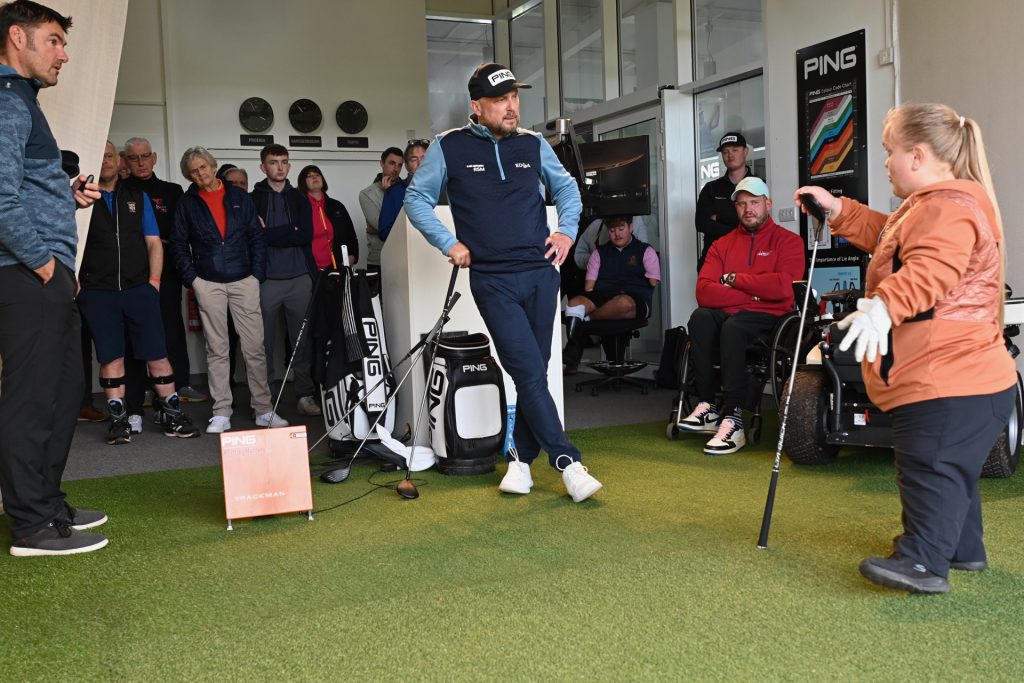
Learning from the Edges has been designed to help coaches to widen their customer base and make their workspace, their golf venue, more inclusive, while adding a specialism that can give them a regional edge – including reaching a variety of players with degenerative conditions such as arthritis; and orthopaedic, neurological and muscular-skeletal conditions that affect so many older players. The two-day camp highlighted what is a huge new coaching opportunity. With 24% of the UK being considered disabled (16% worldwide) and £274 billion being spent by people with disability, market demand in leisure and sport will be a factor, along with the many people who rightly want to see golf as a more inclusive game.
PING’s Custom Fitting HQ in the UK was the perfect venue for this event. As a world- leader in this field, the company was able to exhibit its own recent ground breaking work to radically enhance player experience. For the camp, this included welcoming six established golfers with disability that PING has supported closely in recent times, who were able to share their insights with everyone present, including coaches from as far afield as Switzerland and Iceland, and research specialists from the fields of biomechanics,
spinal rehabilitation and prosthetic engineering.
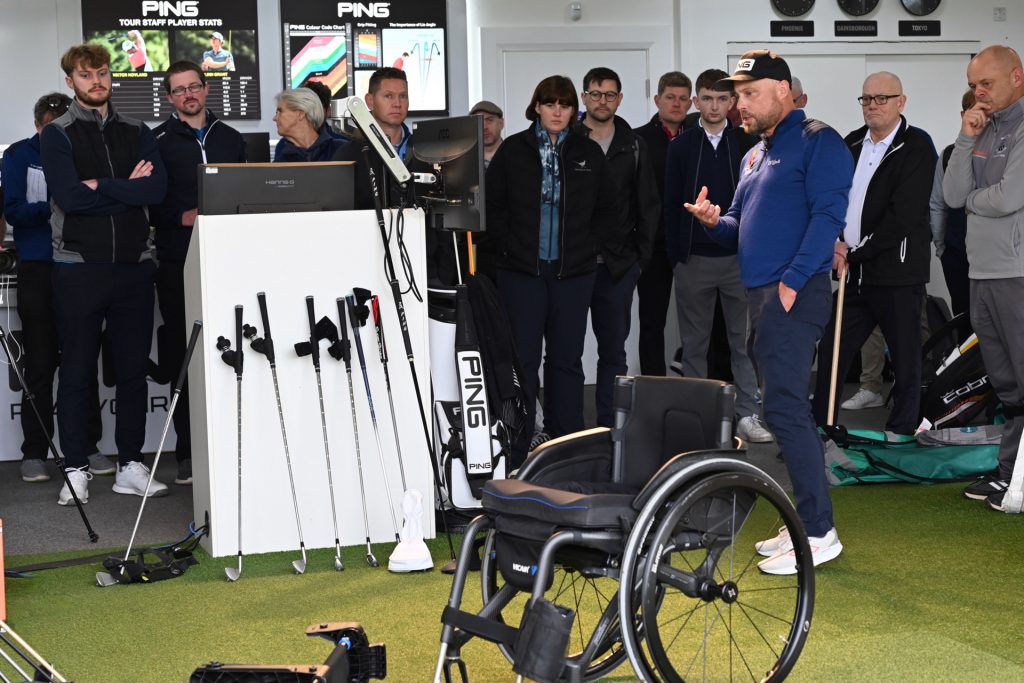
Six players shared their knowledgeG4D players present included: Ellie Perks, a golfer of short stature and herself a PGA Trainee Professional; Brad Smith, a right-leg ‘trail-leg’ amputee; Olli Ingram, a seated player with a spinal injury; Kevin Alderton, a golfer with a visual impairment; Michelle Lau, a player who is autistic; and Adam Dalton, a golfer with multiple limb difference.
“Our international coaching programme, Learning from the Edges, looks at a player’s function rather than disability,” Mark Taylor, EDGA’s Head of Education and Instruction, explained to the coaches. “We all have some functional limitation because of our physical
profile, and this includes Rory McIlroy, your club champion, and all our players here today.
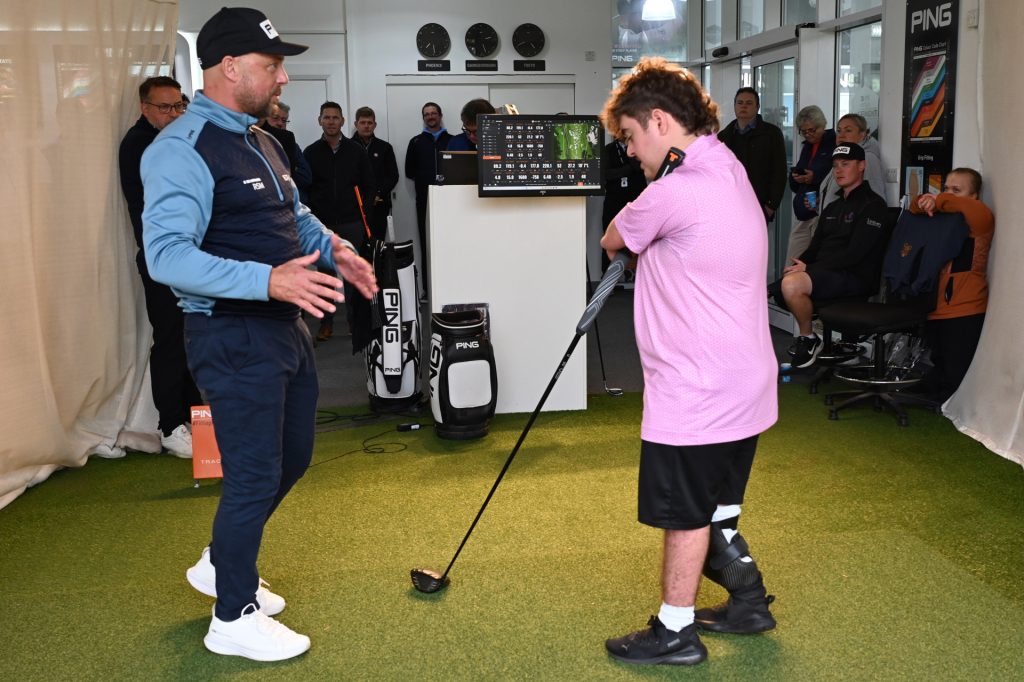
This coaching looks at what new and established players, from across the disability spectrum, can do, rather than what they can’t do, and similarly, this can be translated to supporting players at your club who have lost grip strength, core strength, have balance
issues etc.
“We want to give more confidence to coaches to help anyone with a functional limitation wherever they are on the player pathway. Learning from the Edges is about progress. How can coaches gain the understanding to help? How do we encourage a seated player to
create appropriate force and club head speed in the swing? How do we welcome someone for first coaching when they are blind?
“The ball is stationary, so in theory a person with a neurological limitation has the time to play how they want to. The player has the ability to take ownership of what they’re doing, and a good coach can help at every stage of their learning to create a wonderful coach
and student partnership.
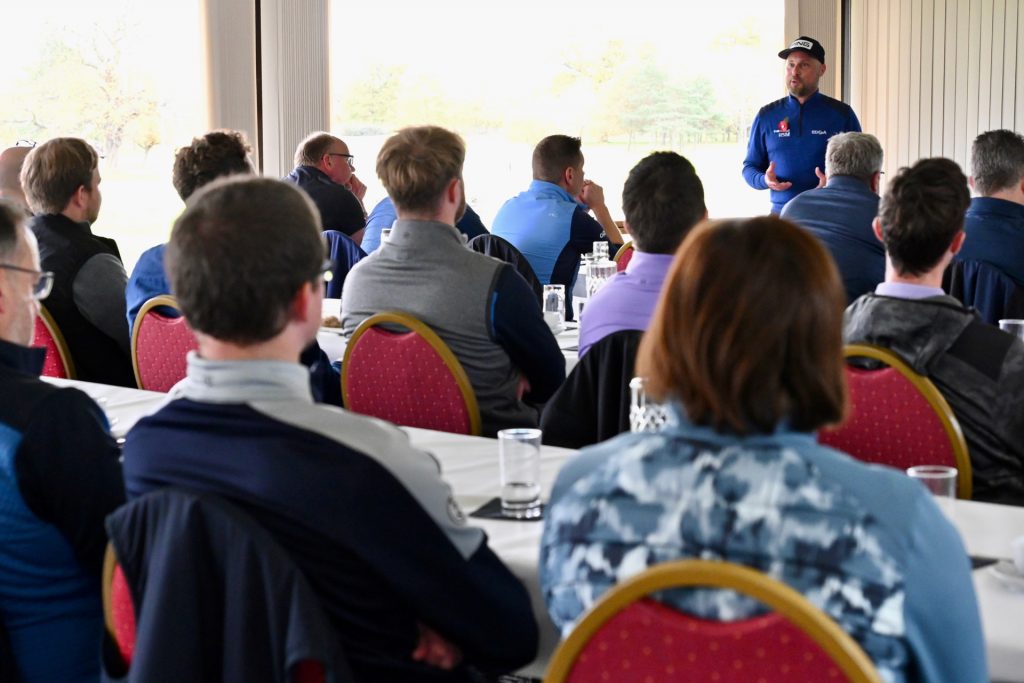
“It’s fantastic that PING is supporting us in this research, through their incredible equipment and custom-fitting standards, but also their passion for doing the right thing for the game, bringing golf to everyone, while helping us to improve coaching for the disabled
population: those people who may feel golf is not for them for various reasons.”
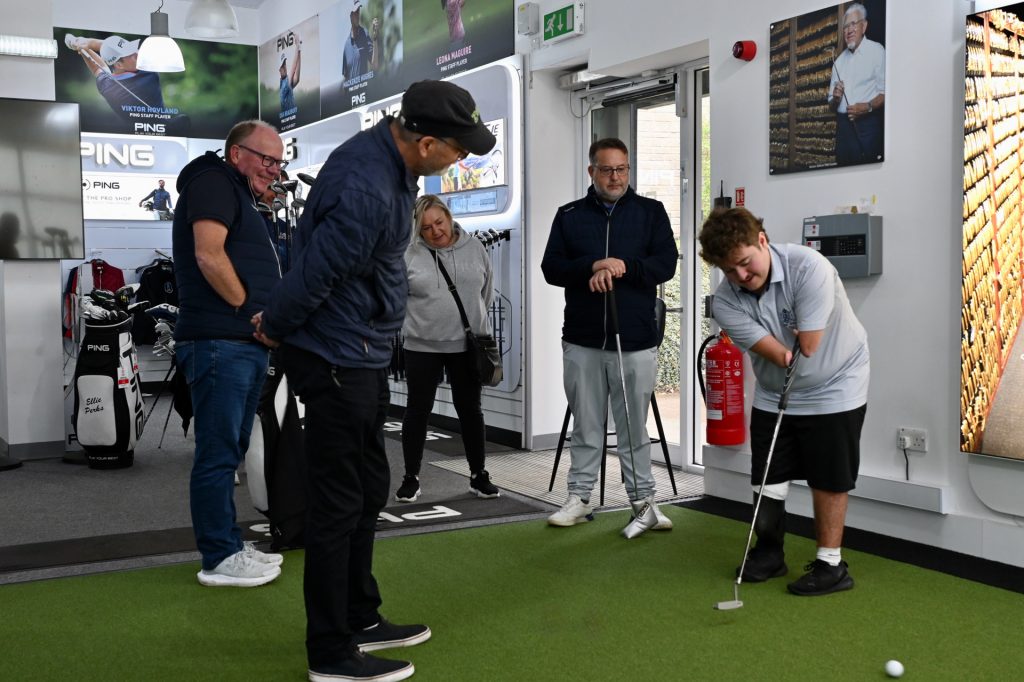
Golf coaches at the forefront Mark added: “We can change that thinking. We can train health professionals, the physiotherapists and community golf coaches to train others. This can include the first
roll of a ball in rehab after an accident, or simple putting games for a survivor of a stroke. It’s all golf.
“Golf coaches can be at the forefront of reaching this new demographic. As a coach, we are about putting the person first to experience and learn golf, and enjoy appropriate coaching, to give them the confidence to thrive through the game.
“Many of the golfers EDGA has supported have said that ‘playing golf has changed my life’. This coaching knowledge, learned from the edges, can help the very centre of your coaching, can make you a better coach and thus also improve your business.”
Please contact the EDGA Coach Education team if you would like further information on training your workforce.